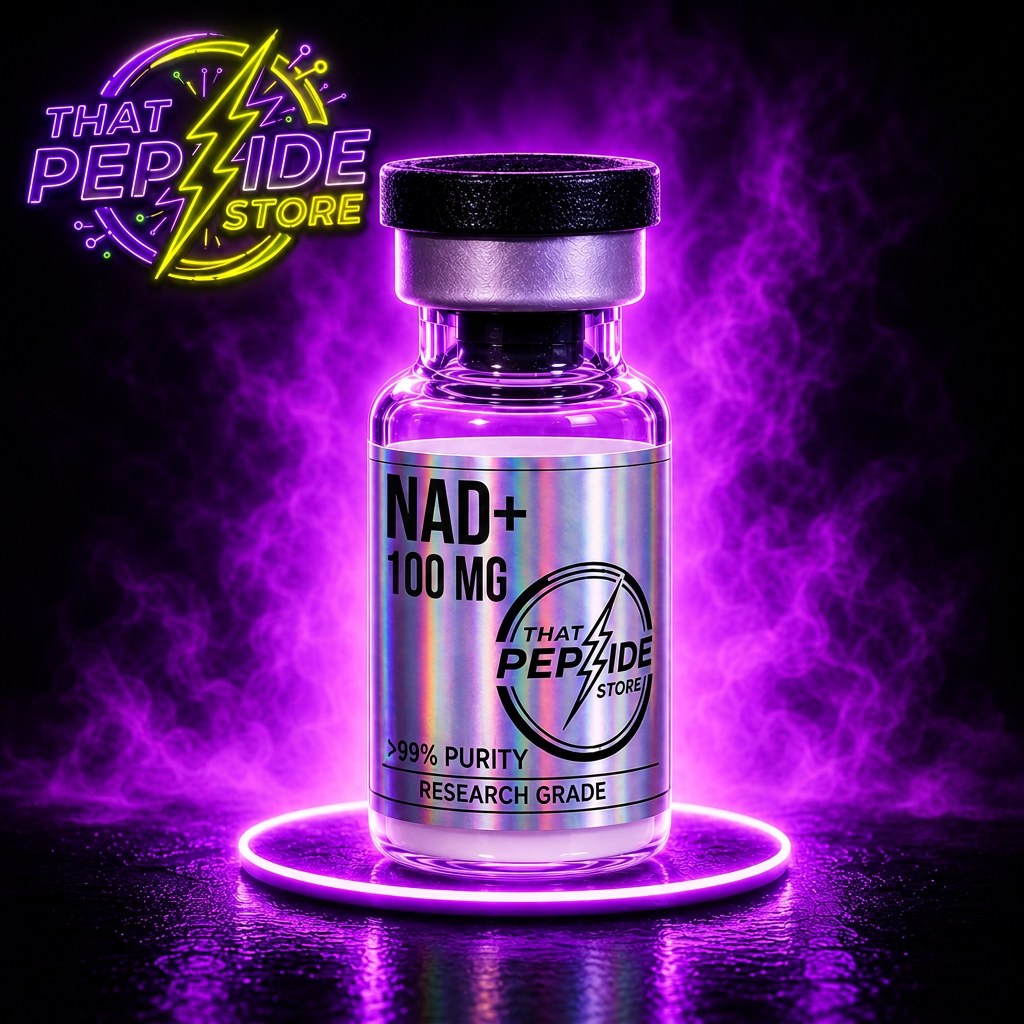
NAD+ Research Compound
Nicotinamide adenine dinucleotide is one of the most studied cofactors in cellular energy metabolism. This page covers where NAD+ appears in the research literature and the analytics that accompany our lots.
Updated August 8, 2026
Why NAD+ appears in so much metabolic research
NAD+ is a redox cofactor central to glycolysis, the citric acid cycle, and oxidative phosphorylation. It is also the substrate consumed by sirtuins and PARP enzymes, which links it to DNA repair and transcriptional regulation research.
Because cellular NAD+ pools are reported to decline with age in model organisms, a large body of work examines precursors, salvage-pathway kinetics, and compartment-specific availability. That breadth is why NAD+ shows up as both a study subject and an assay reagent.
Handling characteristics
- Hygroscopic — keep the lyophilized powder sealed and dry until use
- Solutions are generally prepared fresh; aqueous stability is limited
- Protect from light and avoid repeated freeze–thaw cycling
- Store per the lot documentation included with the shipment
What our lots include
Every NAD+ lot ships with third-party HPLC purity and a batch number that maps to that report. Bacteriostatic water for reconstitution can be added to the same order.
All compounds are sold strictly for laboratory research and development. They are not for human or veterinary use, and nothing on this page is medical advice.
Frequently asked questions
- What is NAD+ used for in research?
- It is studied as a redox cofactor in energy metabolism and as the substrate for sirtuin and PARP enzymes, which connects it to DNA repair and cellular aging research in model systems.
- How is NAD+ stored?
- Keep lyophilized material sealed, dry, cold, and protected from light. Prepare solutions fresh and avoid repeated freeze–thaw cycles.
- Does your NAD+ come with a certificate of analysis?
- Yes — third-party HPLC purity tied to the batch number on the vial you receive.