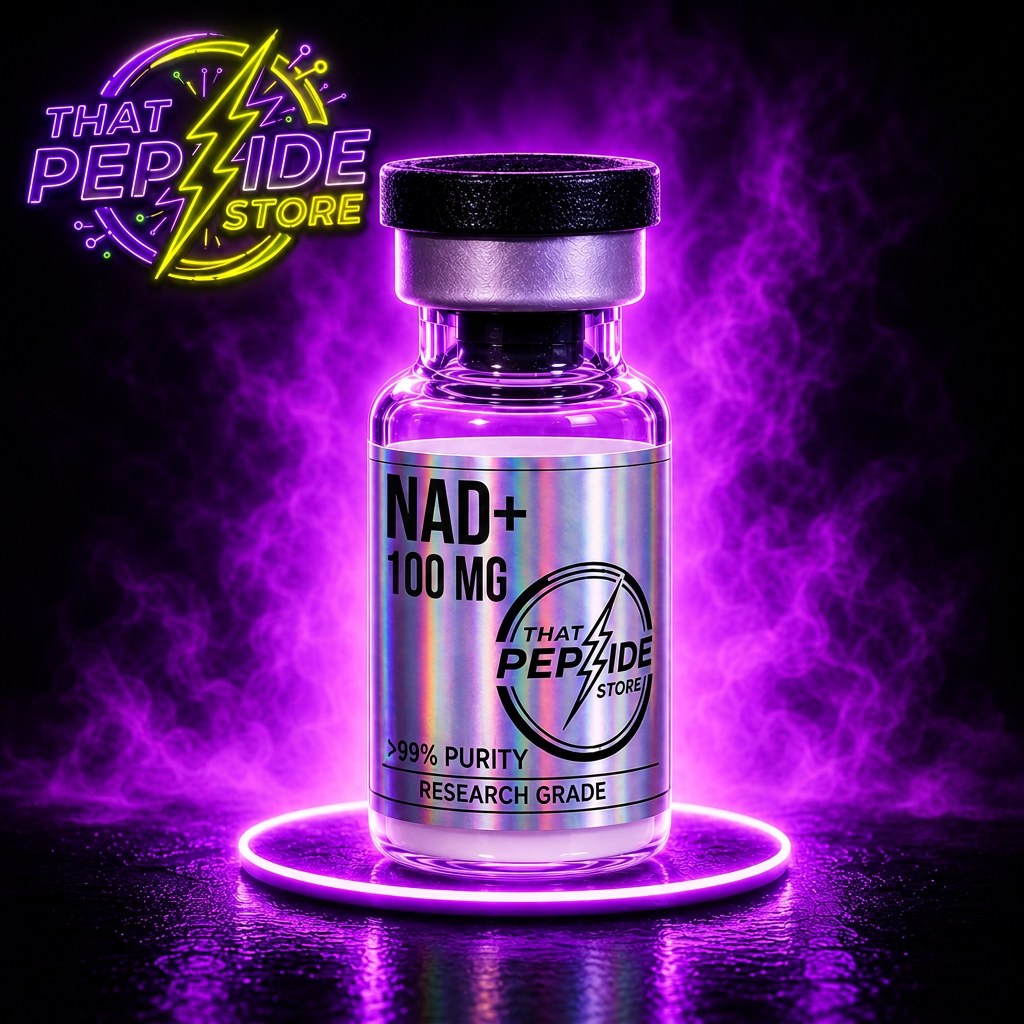
NAD+ Research Guide
NAD+ sits at the intersection of energy metabolism, DNA repair, and transcriptional regulation, which is why it appears across so many unrelated research programs. This guide covers the pathways it participates in and the handling detail that keeps material intact.
Updated August 8, 2026
Where NAD+ acts
Redox cycling
NAD+ accepts a hydride to become NADH in glycolysis and the citric acid cycle, then is regenerated at the electron transport chain. In redox roles the molecule is recycled rather than consumed, so pool size matters more than turnover.
Consumption by sirtuins and PARPs
Sirtuin deacetylases and PARP enzymes cleave NAD+ and consume it stoichiometrically. This is the branch that links NAD+ availability to DNA damage response and chromatin regulation in the literature.
The salvage pathway
Most cellular NAD+ is regenerated from nicotinamide via NAMPT rather than synthesized de novo from tryptophan. Salvage-pathway kinetics are therefore a frequent target in studies of NAD+ pool maintenance.
Practical handling
- Highly hygroscopic — minimize open-air exposure and reseal promptly
- Prepare solutions fresh; aqueous NAD+ degrades over time and is pH sensitive
- Keep cold and dark; avoid repeated freeze–thaw cycles
- Aliquot before freezing so a working volume is thawed only once
Compounds studied alongside NAD+
Mitochondrial-focused programs commonly run NAD+ in parallel with SS-31 and MOTS-c. Sourcing them on one order keeps storage and transit history identical across arms.
All compounds are sold strictly for laboratory research and development. They are not for human or veterinary use, and nothing on this page is medical advice.
Frequently asked questions
- Why does NAD+ need to be prepared fresh?
- Aqueous NAD+ degrades over time and is sensitive to pH, so freshly prepared solutions give more reproducible results than stored stock.
- What is the NAD+ salvage pathway?
- The route that regenerates NAD+ from nicotinamide, primarily through NAMPT. It supplies most cellular NAD+ rather than de novo synthesis from tryptophan.
- Should NAD+ be aliquoted before freezing?
- Yes. Aliquoting means only the working volume is thawed, which avoids repeated freeze–thaw cycles across the whole stock.